
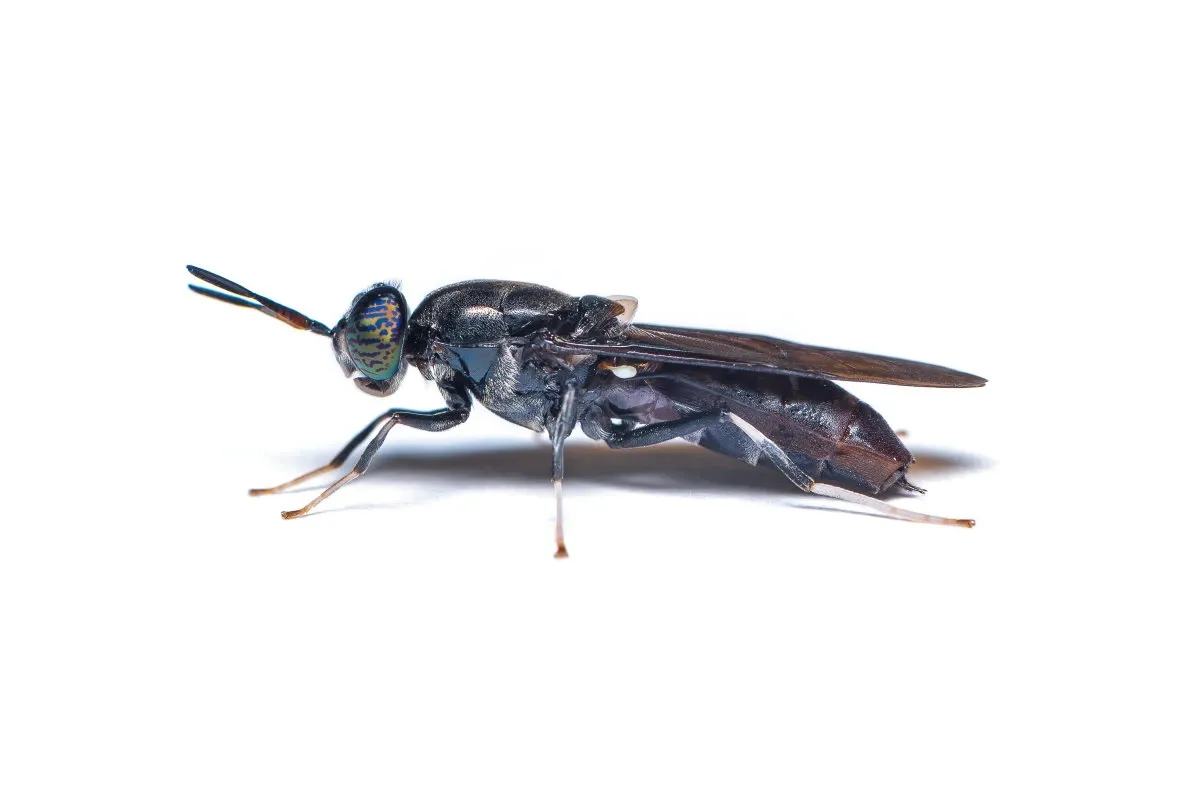
Using flies to create food protein. The subject of this article is the Black Soldier Fly. You have probably not heard of it, being a relatively recent discovery, but you will learn a few interesting details as you read on.
This insect is native to the Americas, but has by now acclimatised to every continent. Females lay their eggs in plant substrates and in decomposing animals. The larvae develop by consuming plant or animal waste, which explains both their use in bioconversion and why they are a common presence in compost. Although it is a non-native species, the European Union does not consider it invasive: the adult is entirely harmless to humans, and the larvae are useful for waste management and recovery.
Females are able to lay up to 500 eggs at a time. The larvae, though only 1 mm at hatching, reach 25 mm and a weight of 3 g. They feed on a wide variety of organic matter, with a diet that adapts easily to their surroundings. Once mature, the black soldier fly lives between 50 and 70 days, given enough resources to survive.
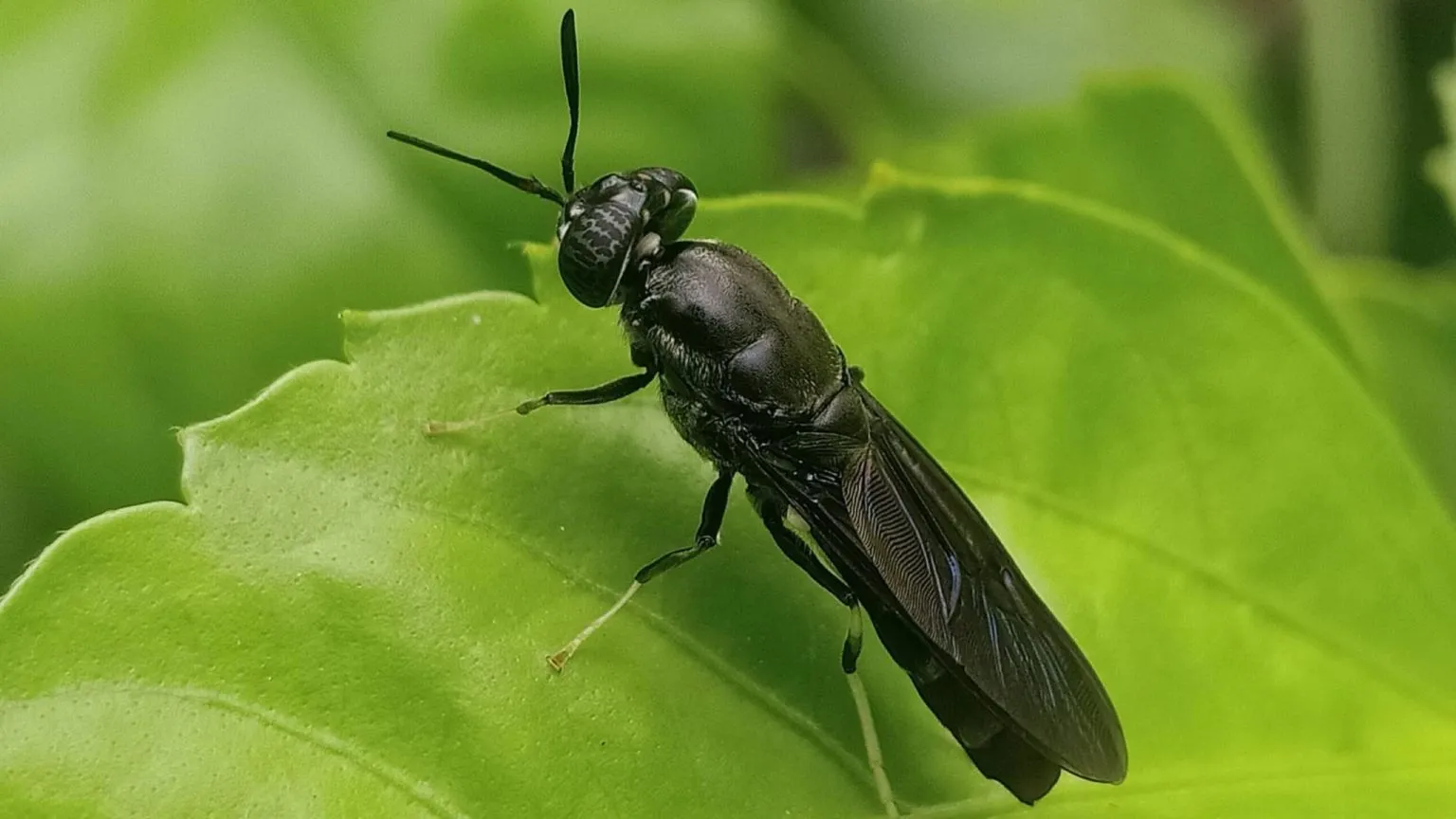
Environmental benefits
The benefits of this fly are numerous, but the most important are these:
- Because the larvae are large, other fly species are prevented from laying eggs in the same organic matter, since the black soldier fly larvae will consume it first.
- They are not harmful to humans: their sponging mouthparts are much reduced, so they can consume only liquids or flower nectar. They do not regurgitate food, so they do not spread disease the way other fly species do.
- They fly far less than ordinary flies. As adults they have less energy, which makes them easy to catch and relocate. They neither bite nor sting; their only defence is to hide.
- After they began to be used in agriculture and animal husbandry, tests showed significant reductions in E. coli bacteria in manure.
- They reduce polluting factors in manure in a very short time.
- They significantly reduce the volume and weight of organic waste. The larval colony fragments the food, works it, and generates heat, increasing the rate at which compost evaporates. Significant quantities of compost are also converted into carbon dioxide respired by the larvae and other microorganisms. Larvae of this species reduce compost volume by around 50%.
Use in human food
Now for the interesting part: the use of these larvae in human food.
They are a very significant source of protein. They do not create it themselves, but through the nutrients they consume. The protein content of the larvae can reach 40%, and they are also rich in calcium and other nutrients. They can be used to make flour, which makes them ideal for anyone wanting protein from more ethical sources than conventional agriculture.
The benefits for people are:
- They are full of energy. The larvae do nothing but eat. They can eat up to twice their own weight in order to grow as fast as possible. Once mature, they lose the ability to feed, so they live just long enough to reproduce again.
- They are a clean food source, and easy to maintain. They kill all bacteria in the food, and even their waste is sanitary.
- They reproduce very quickly. Compared with any domestic animal, they lay up to 500 eggs, even though the life cycle is much shorter. Nutrient production is far higher.
- They are very easy to harvest, even at home; various devices and complete farms exist for raising this species.
- They solve the problem created by food waste. Black soldier fly larvae can be fed almost anything, including spent grain from breweries or waste from ethanol production.
Although they are treated as something “disgusting” to eat and given little attention, they are already farmed at scale both for animal feed and for human consumption. They are easy for us to raise too, offering a constant food source. They are clean, full of protein, and considered among the best insects for consumption.